What does playing sport as a girl have to do with the kind of job you think you can do as an adult?
A recent research study looked exactly at this question – and the results speak directly to RAEX – Rowing Against Exclusion.
The starting point is familiar: many professional fields – from engineering to leadership roles – are still male-dominated. Not because women are less capable, but because we all grow up inside gender stereotypes that tell us, explicitly or implicitly, which jobs are “for men” and which jobs are “for women”.
Sport is one of the places where these messages are very visible. But it can also become a space where girls learn to question them.
The Study: 501 Women, Youth Sport and Ideas About Work
The study collected data from 501 women aged 18–74. Participants were asked:
- which sports they played as girls and teenagers
- how many hours per week they played
- whether they played team sports, competitive sports, or sports often seen as “masculine” (rugby, martial arts, ice hockey, etc.)
- what their gender role beliefs look like today – for example, whether they think certain jobs are more “suitable” for men or for women, or whether they believe men and women have different natural strengths.
The goal was to see whether and how youth sport experiences are associated with more or less stereotyped ideas about work later in life.
The Key Message: Crossing Boundaries Matters More Than Hours
One of the most interesting findings, in RAEX language, is:
It’s not just how many hours of sport you do – it’s which boundaries you cross.
The results show that:
- doing a lot of sport in general does not automatically lead to less stereotyped views about which jobs are for men or women;
- but there is a clear association between having played at least one “masculine” sport before college and having more gender-neutral beliefs later on about what men and women are “naturally suited” to do.
In simple terms, women who experienced traditionally “male” sports from the inside were more likely, as adults, to think:
“There are no real ‘men’s jobs’ and ‘women’s jobs’. It depends on skills and interests, not gender.”
Interviews with participants add another layer: these experiences are often linked to greater self-confidence, a stronger sense of competence and agency, and feeling more comfortable in spaces that society labels as “for men”.
Family and Environment: Sport Doesn’t Work Alone
The research also makes it clear that sport does not act in isolation. Other factors matter a lot, such as:
- the family environment (parents who open or close doors: “try it, it’s for you too” vs. “that’s not for girls”);
- the type of school (public/private, mixed or single-sex);
- the culture of the club (comments, jokes, expectations, how girls’ and boys’ performances are valued).
Sport can therefore be:
- either a space that reinforces stereotypes,
- or a space that challenges them and offers new possibilities.
It depends on how we design and live that environment.
What This Means for RAEX – Rowing Against Exclusion
For RAEX, this study is extremely useful because it confirms some of the project’s core intuitions.
1. Putting Girls Inside a “Masculine” Sport Matters
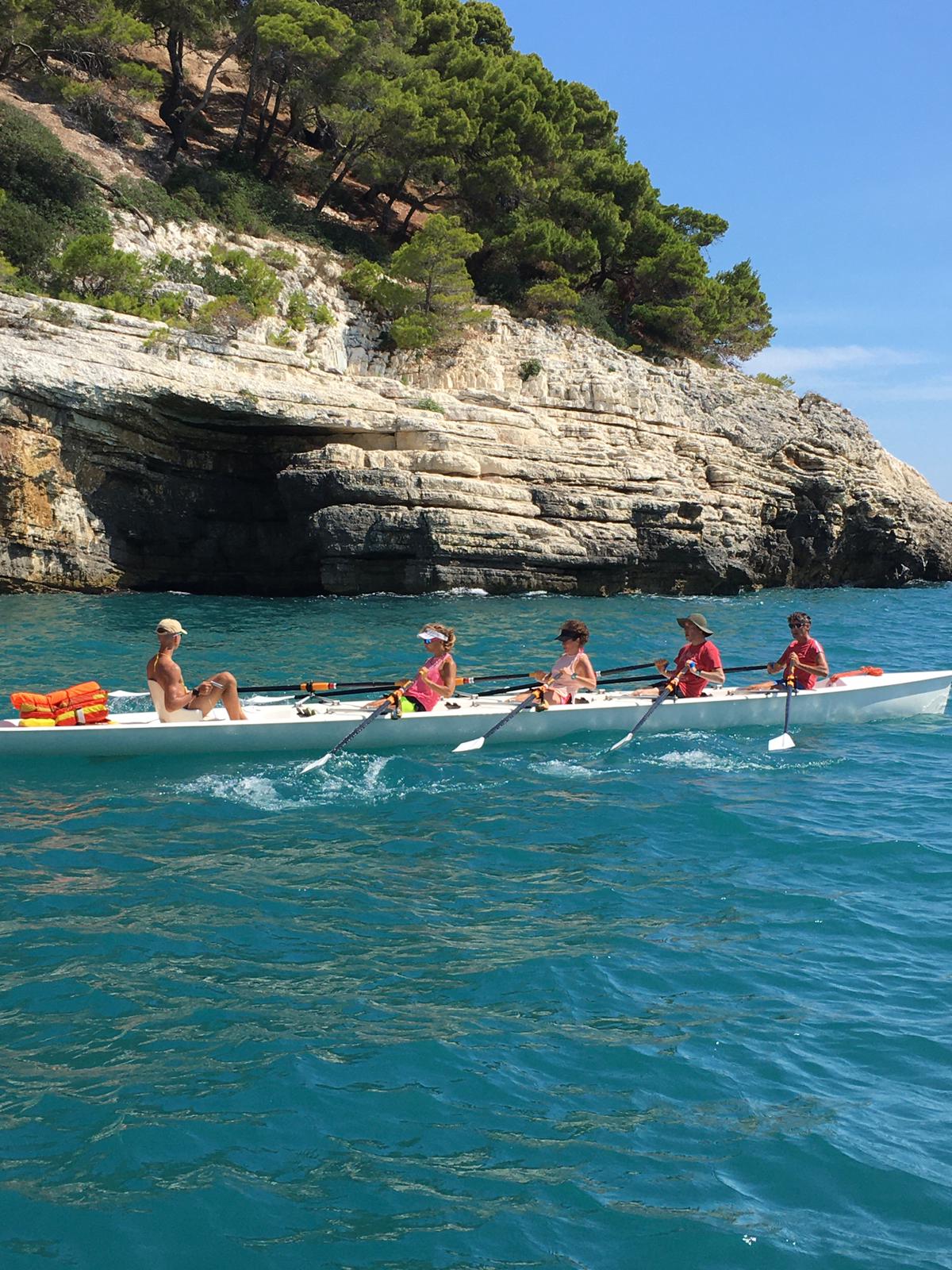
Rowing – especially in some sporting cultures – is still often perceived as a tough, physical, traditionally male sport. When girls and young women become full protagonists in rowing, they are not just training: they are occupying a space that historically has not been “meant” for them.
RAEX uses this deliberately: by creating inclusive, mixed-gender rowing contexts, the project helps:
- normalise the presence of girls and women in a “strong” sport;
- make it easier, later, to imagine themselves in “strong” professions too – leadership roles, technical fields, decision-making positions.
2. Mixed Crews Are More Than a Nice Image
Mixed crews, shared technical roles, female coaches and women visible in organisational positions are not only “nice examples of diversity”: they send a very clear message:
Strength, endurance, leadership and precision are not gendered qualities.
That message is exactly what the study suggests we need if we want to move towards more gender-neutral beliefs about what women and men “should” do.
3. It’s Not Enough to “Let Girls Row”: Context and Storytelling Matter
The findings also remind us how important it is to work on:
- families, explaining why it matters that daughters stay in sport through adolescence;
- role models, giving visibility to female rowers, coaches and leaders in rowing;
- language and communication, avoiding “cute” or patronising narratives about girls (“brave because they try”) and recognising them as full athletes and future professionals.
RAEX can build on this by making sure that every camp, exchange and event:
- includes moments where girls’ voices are heard;
- shows concrete stories of women who combine sport, study and work in non-traditional fields;
- explicitly talks about stereotypes and how to challenge them.
From the Boat to the Workplace
The final takeaway is powerful:
doing sport as a girl is not only about health or social life. In some contexts – especially when it crosses gender boundaries – it becomes a training ground for freedom and choice.
RAEX – Rowing Against Exclusion fits exactly into this perspective:
- it uses rowing to bring different people together;
- it focuses on gender, but also on other forms of exclusion;
- it builds environments where girls and boys can see themselves in roles that society still quietly labels as “not for you”.
Every time a girl steps into a boat and feels that she truly belongs there, she is not just moving an oar through the water.
She is also moving the invisible line of what is considered possible for women – in sport, in education and in work.
Read the full article here https://www.tandfonline.com/doi/full/10.1080/23750472.2024.2443446

Comments are closed